
Interactive exhibit design
I led UX design for four interactive exhibits at the National Museum of Mathematics.
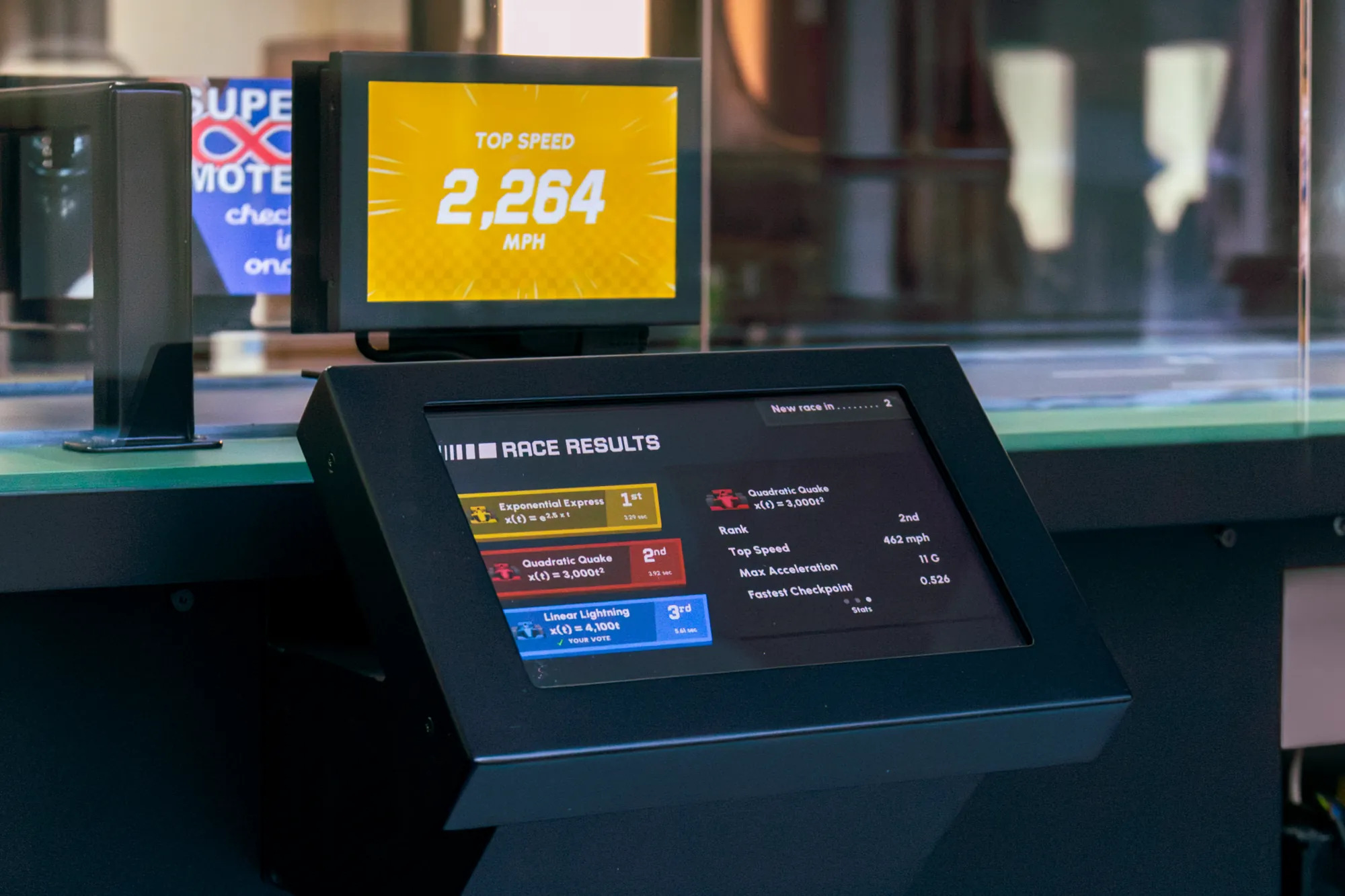
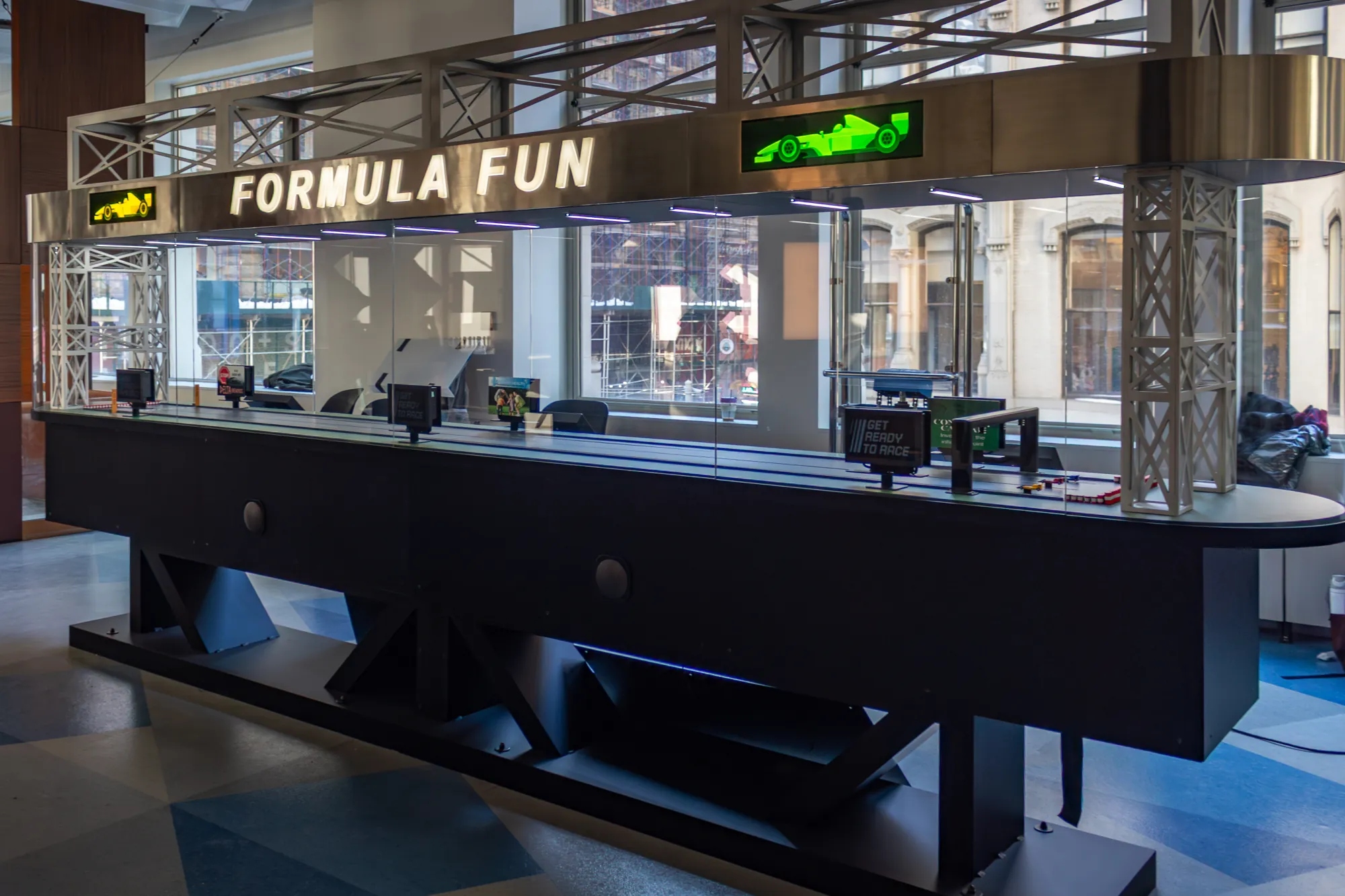
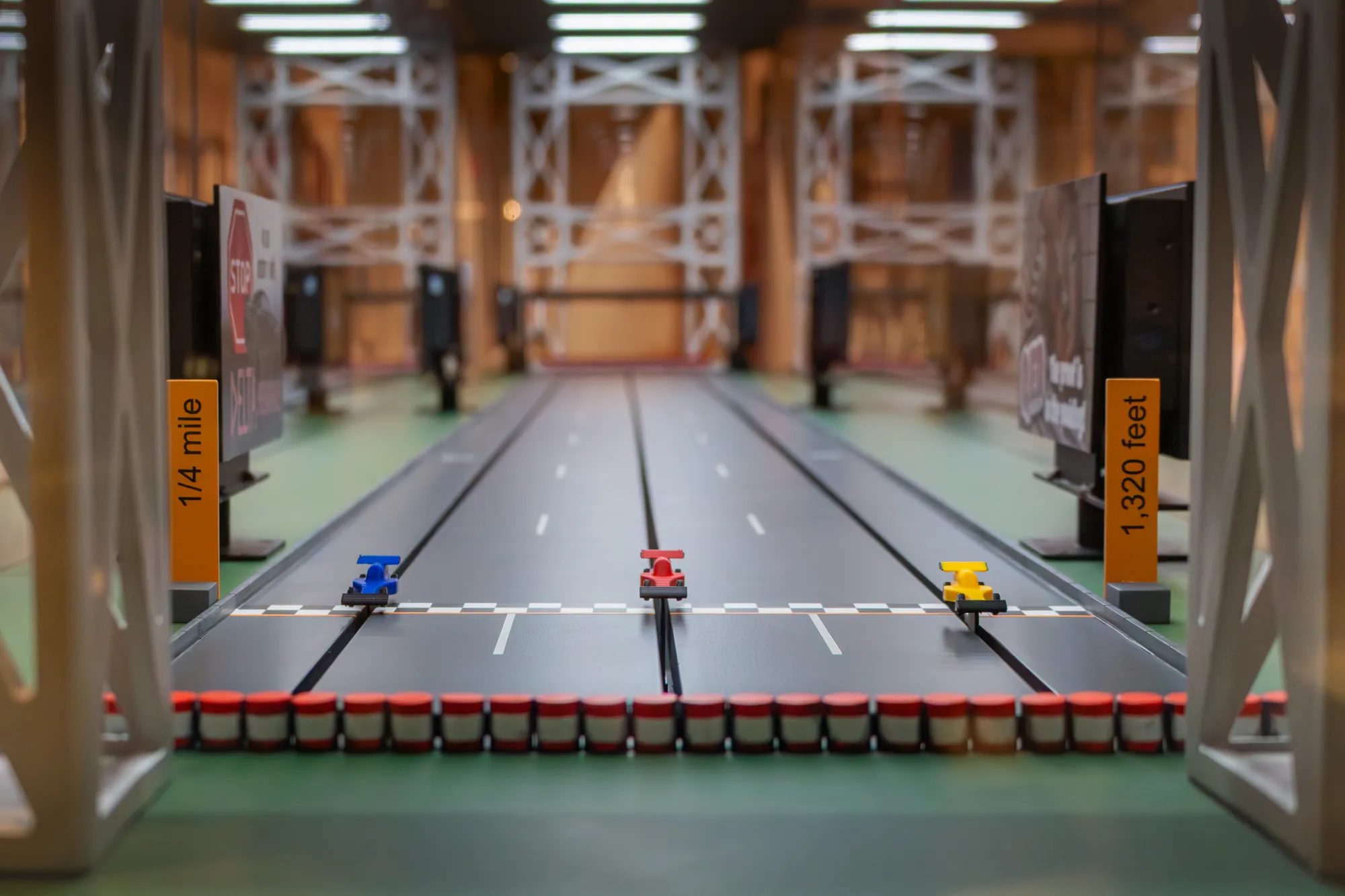
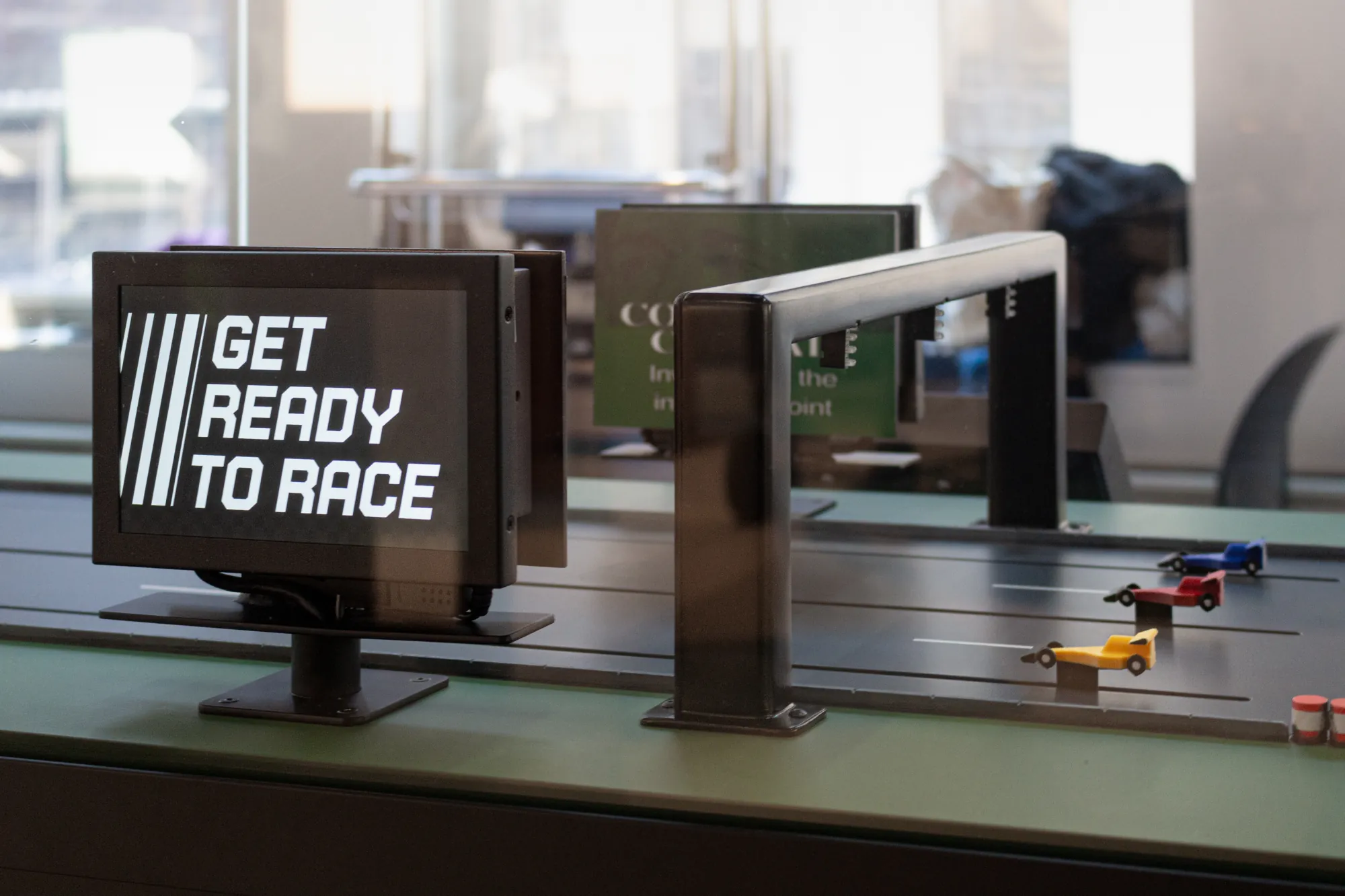
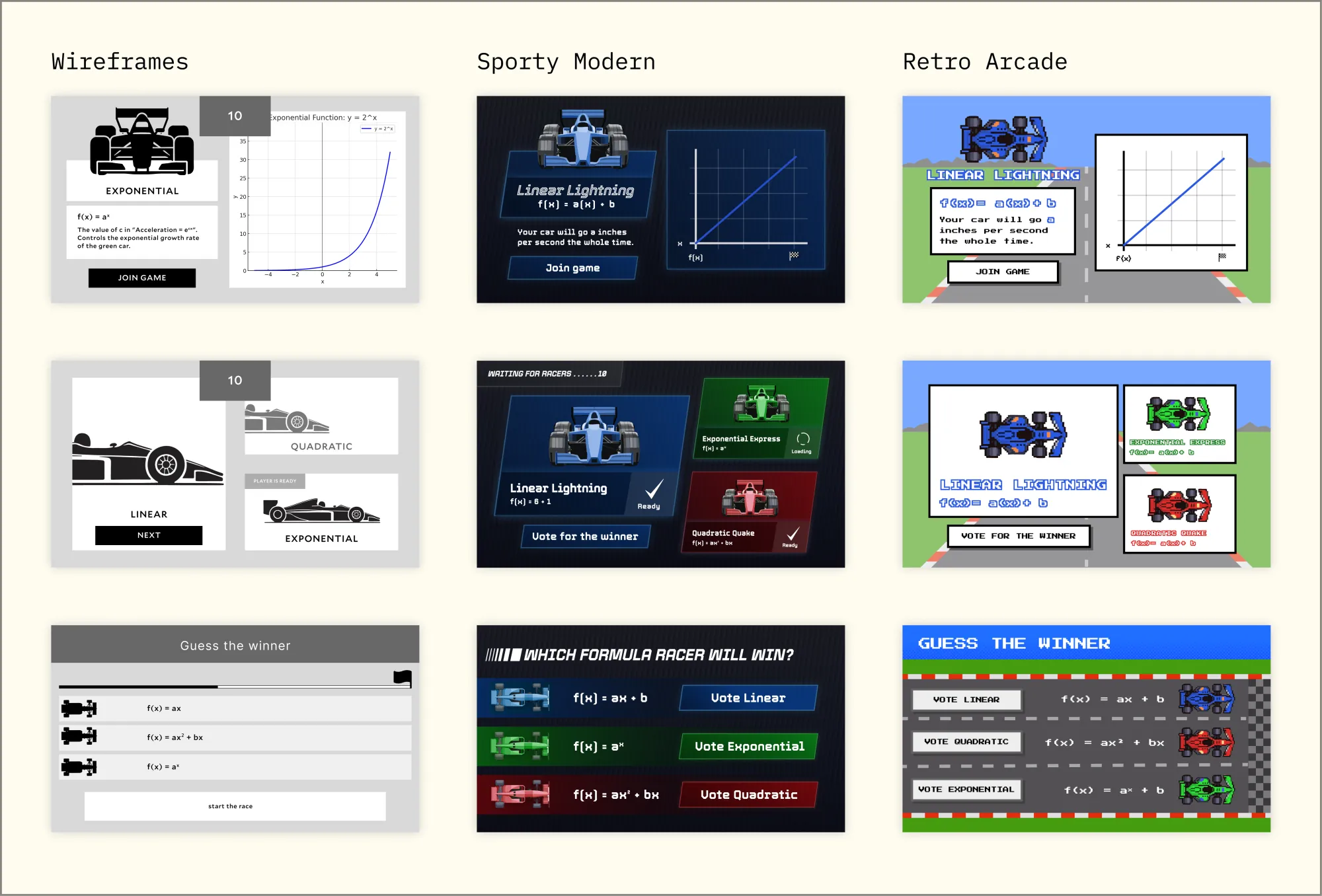
One of those exhibits is Formula Fun, a fast-paced game where three small cars race down a fifteen-foot track, each driven by a different mathematical equation. Three touchscreen stations invite visitors to look more closely at the equations and predict which racer will reach the finish line first. Six more smaller screen function as "jumbotrons", broadcasting race results to spectators.
This prediction-based loop was not the original design plan. Early rounds of prototyping explored versions where visitors could type in their own equations or select from a list of coefficients. Even in internal testing, it quickly became clear that this approach worked against the learning goals. In practice, this pushed people to game the system. Team members would select the largest coefficient available to make their car go fastest, paying more attention to winning the race than to how the equations actually behaved.
Switching to a prediction-based structure shifted attention back to the race itself. Visitors choose which car they think will win, watch the race unfold, and then reconcile their expectations with what actually happens. The math reveals itself through motion rather than explanation.
Formula Fun reflects my broader approach to interaction design. Abstract systems become intuitive when they are embodied, and learning emerges through repeated observation rather than instruction.