
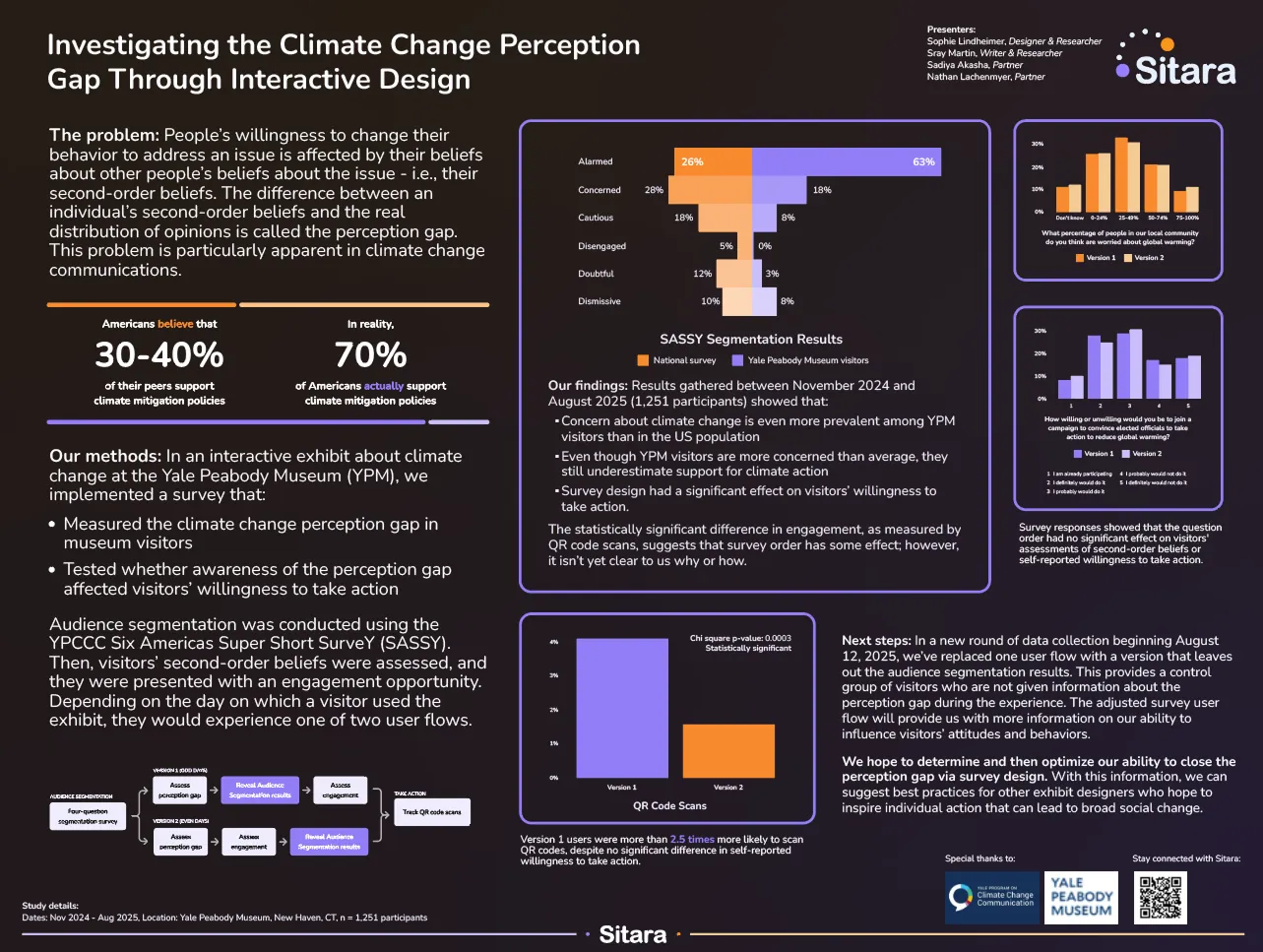
Ongoing research embedded in an interactive kiosk
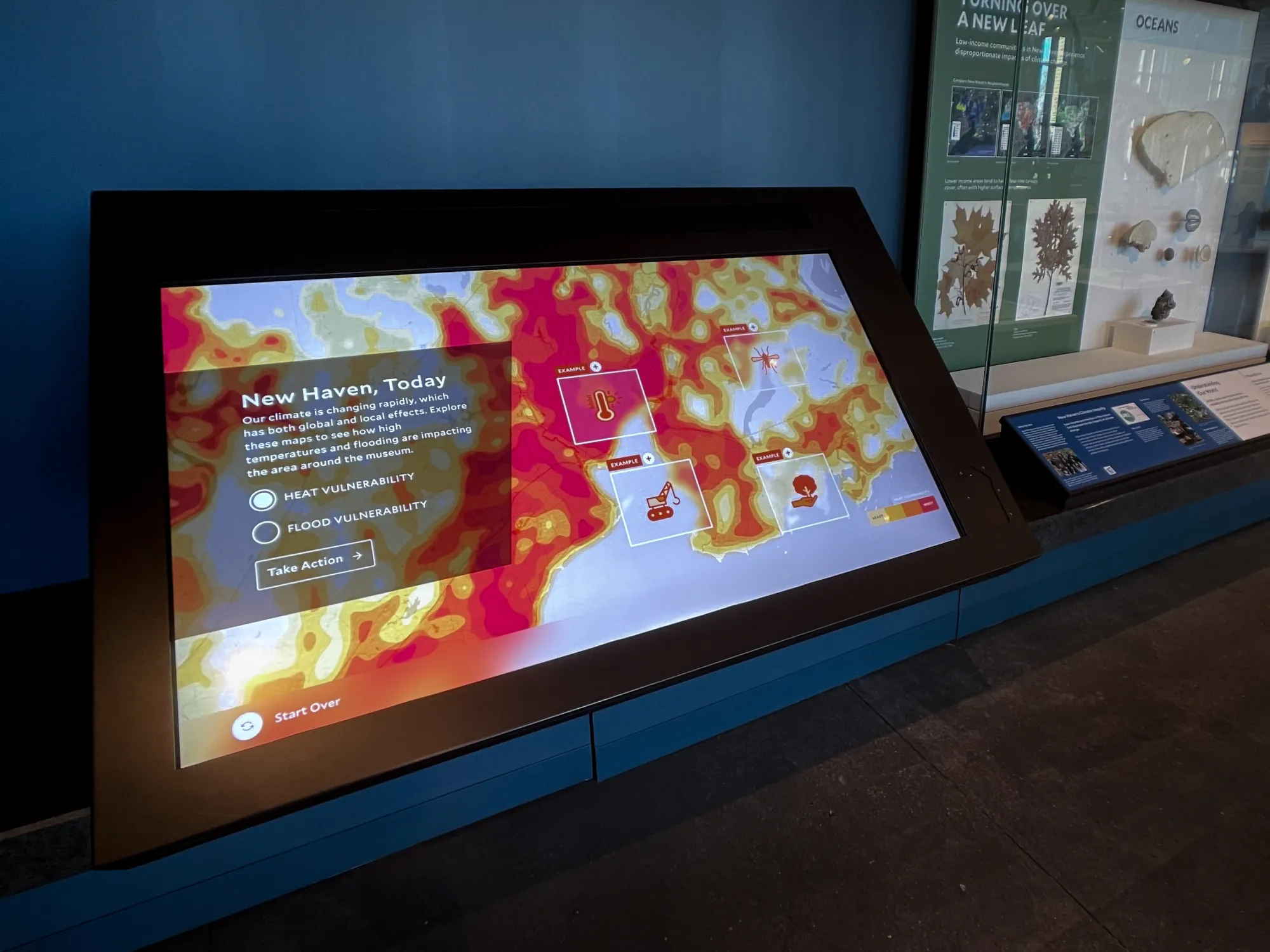
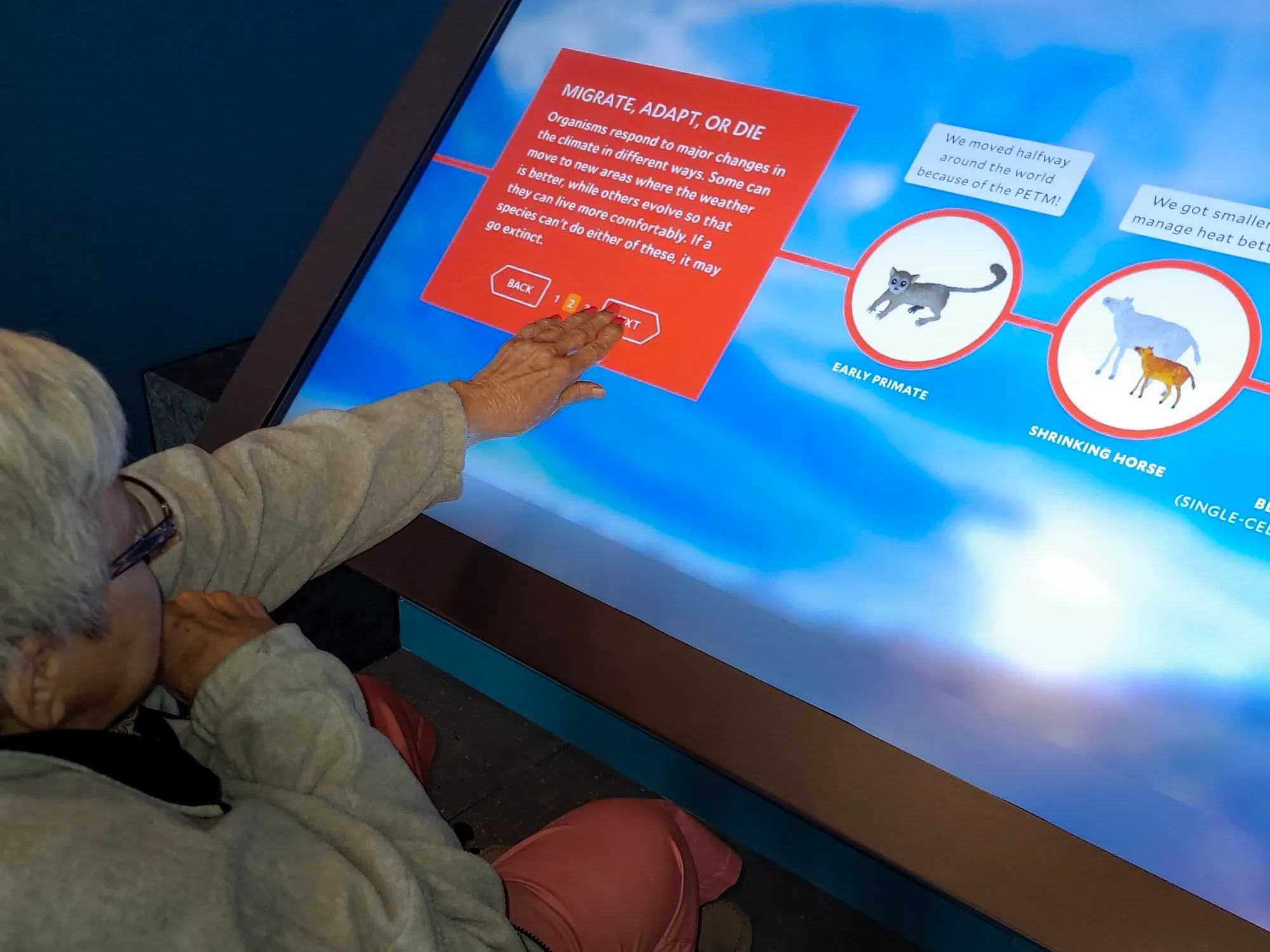
Originally designed as part of a suite of 15 multimedia kiosks for the Yale Peabody Museum, the Climate Change kiosk quickly took on a life of its own. Questions around messaging, goals, and audience demanded a more careful, research-driven approach than initially anticipated.
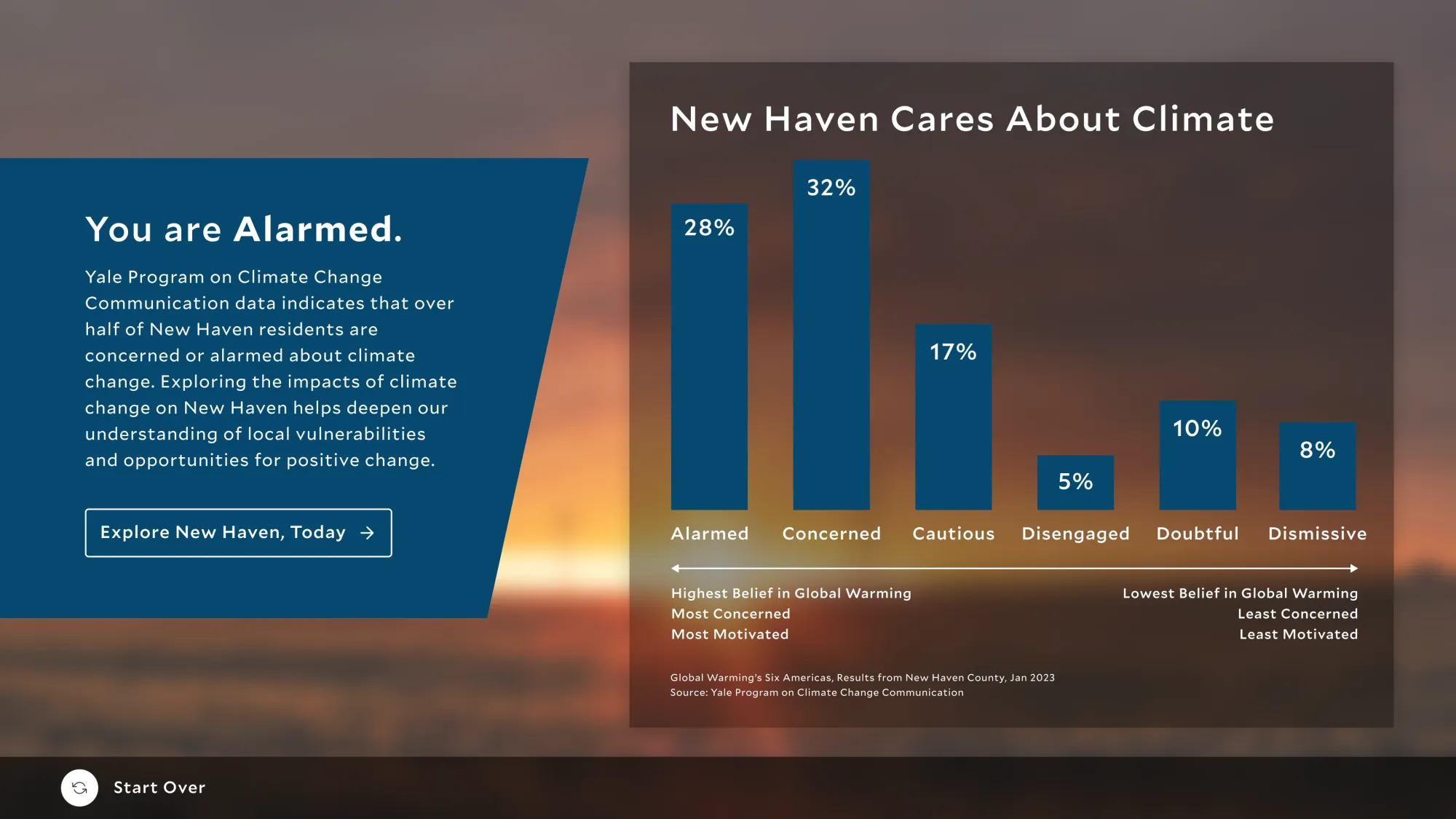
Our original assumption was that the kiosk should persuade visitors that climate change is real and urgent, using scientific facts and figures. Early conversations with the Yale Program on Climate Change Communication (YPCCC), however, challenged this premise. Drawing on climate perception studies from other natural history museums and from the New Haven area, we found that more than 90% of visitors already believed climate change was real and concerning.
So, what can we do to help motivate those who are already alarmed? We suspect the answer may lie in our own initial assumption: people simply don't realize just how many of their peers are also alarmed. This misconception, often referred to as a perception gap, can pose a real barrier to collective action.
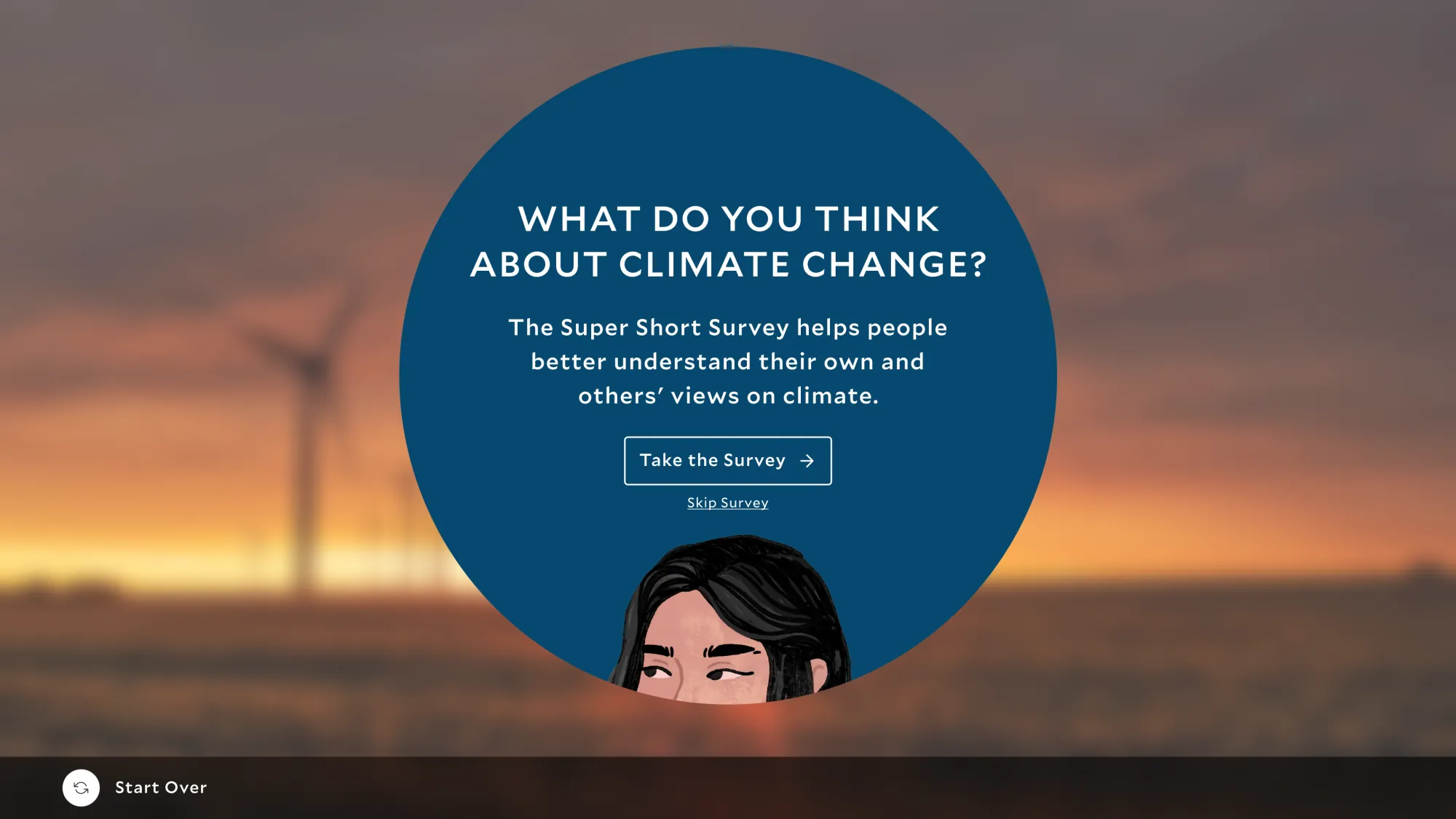
In partnership with YPCCC and the Yale Peabody Museum, I led the design and implementation of an embedded research study to test this theory through the kiosk's interaction design. If we corrected this misconception, would visitors be more likely to take action? Early results show a significant increase in taking action, measured via QR code scans, but further data is needed to validate our claims.
This research is ongoing and has been presented at Association for Science and Technology Communication and the American Alliance of Museums.